John Rebus
Hide and SeekJohn Rebus is an Edinburgh detective whose pursuit of Ronnie McGrath’s death takes him from a neglected housing estate to an elite criminal world—and forces him to confront how readily a plausible theory can obscure the actual crime. He is persistent but not infallible: he recognizes the signs of a staged death, follows the evidence of poisoned heroin, and eventually admits that his own interpretive certainty has led him astray. The investigation makes his skepticism both a professional tool and a source of isolation, while showing how little justice can be guaranteed when influence and reputation control what becomes public knowledge.
Identity and Isolation
At a dinner party, John Rebus finds himself unable to join the guests’ conversation. Their talk of property and new businesses feels remote from the experiences that have shaped his working life. He imagines that a story from police work would not bridge the distance: the others would respond with polite discomfort, confirming his sense that he is different from them. His attention remains fixed on his meal as despair gathers. The scene establishes a private loneliness that accompanies, rather than prevents, his ability to function among others.
His work brings him into contact with circumstances that the dinner-party conversation excludes. At Pilmuir Estate, he sees boarded windows, damaged playgrounds, broken fences, and neglected homes. Within a few hundred yards, a new development advertises itself as luxurious under the name Muir Village. John Rebus recognizes the distance between the sales pitch and the estate’s lived conditions: renaming the place cannot erase its neglect. This contrast is more than backdrop to the case. It places the death of a heroin user within a city marked by unequal attention, where decay is treated as ordinary and investment appears close by but separate.
Investigating Ronnie McGrath’s Death
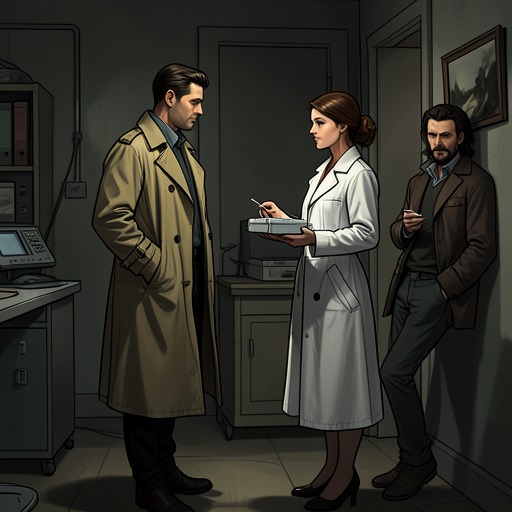
John Rebus arrives at the house to find police and medical personnel already there. A doctor initially identifies heroin overdose as the apparent cause of death, pointing to packets of powder at the scene. John Rebus notices bruising, however, and does not let the first explanation settle the matter. The body’s position also troubles him: Ronnie McGrath lies on his back, with his legs together and arms outstretched. John Rebus later shows the arrangement to Tony McCall and asks whether it looks accidental. The question turns a detail of the scene into a reason to investigate how the body came to be there.
Medical evidence changes the meaning of the apparent overdose. A sample is reported to be 95 percent impure; the doctor’s educated guess is that it contains a dangerous adulterant, possibly rat poison. The contaminated heroin was lethal, making the convenient explanation of an ordinary overdose inadequate. John Rebus also learns that intravenous drug use is widespread in Edinburgh, a public-health reality the doctor connects to the city’s AIDS crisis. His own dry response about the city’s grim records briefly turns that fact into gallows humor, but the exchange underscores the scale of the problem: Ronnie’s dependence is personal, while the risks surrounding drug supply and the response to addiction extend beyond him.
John Rebus tests his assumptions against other people’s interests and silences. Tony McCall admits that no one wants to ask where the money comes from, because knowing could make a person an accessory. The exchange gives John Rebus a glimpse of how complicity can be maintained without a formal agreement: refusing to hear an explanation becomes its own kind of protection. When Charlie protests that he is no tourist in Pilmuir Estate, John Rebus challenges his claim to belong there, seeing his presence as a privileged visitor’s fascination with deprivation. His bluntness exposes a class divide, though it also shows how quickly he can classify someone before understanding the full story.
Reading the Evidence—and Misreading It
John Rebus repeatedly tries to give the scattered clues a coherent shape. At one point, he recognizes that he has no solid case in the conventional sense: there are questions, suspicious acts, and possible crimes, but not yet a structure a jury could easily follow. Ronnie McGrath may have injected himself, and the scene may have been arranged to encourage a finding of accidental overdose. John Rebus writes down what he thinks he knows, notices that conjecture has entered the account, and forces himself to consider a different interpretation. His method depends not just on suspicion but on recognizing when suspicion has outrun proof.
That discipline does not prevent a major mistake. The body’s pose, candles, and occult-looking markings draw John Rebus toward a theory in which the apparent ritual is central. Later, he acknowledges that he read too much into the scene, confusing suggestive details with evidence of a connected conspiracy. The staging had helped make the death look like a simple overdose, but the supposed occult pattern was not the explanation he had imagined. This reversal does not make his attention to detail useless; it shows instead that details can mislead when a detective turns resemblance into cause. John Rebus’s eventual correction is part of the investigation’s substance: he has to revise not only a suspect list but the story he has built around the clues.
Conflict with Authority and Influence
As John Rebus pursues the case, he believes a man called Hyde wants him to stop investigating Ronnie McGrath’s death. He tells Superintendent Watson that a complaint against him is a setup designed to serve that purpose. Although Superintendent Watson acknowledges that the situation looks foolish, he orders John Rebus away from the inquiry for a time, explaining that the complaint must be investigated and that the accuser’s account can be dismantled. John Rebus accepts the order, but understands that being removed from the work gives his opponent an advantage. His frustration is sharpened by the difference between what he believes is happening and what the institution can officially act on.
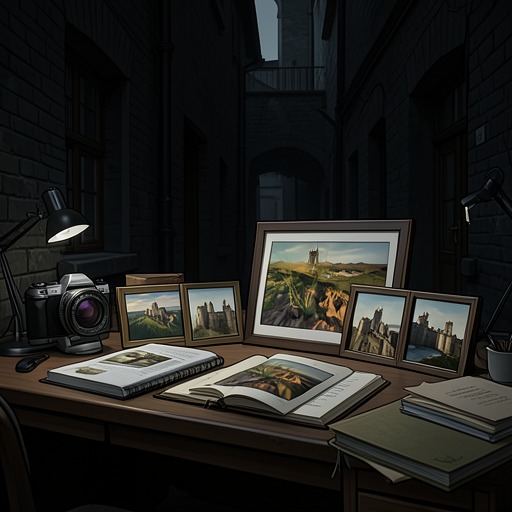
The case eventually opens onto a criminal enterprise larger than the apparent death scene. At Hyde’s Club, John Rebus identifies Finlay Andrews as central to Ronnie McGrath’s killing. He concludes that Ronnie was deprived of heroin and then given a lethal supply, while someone arranged the scene to encourage an overdose finding. The evidence also points to photographs Ronnie had kept as possible leverage, though John Rebus realizes that their usefulness as proof or blackmail material was limited. His revised understanding replaces the imagined occult plot with a more consequential one involving exploitation, concealed criminal activity, and the people able to keep it hidden.
Aftermath and Narrative Role
John Rebus remains officially sidelined while officers question Malcolm Lanyon, but he stays close to the interrogation because he knows Lanyon’s possible tactics and fears that a technicality might allow him to evade responsibility. His continued involvement shows a characteristic tension: he is willing to disregard the spirit of an order when he believes the inquiry could fail, yet he knows that procedure can determine whether the result holds. He also cannot compel the truth into public view simply by recognizing it.
The aftermath confirms that limitation. Reports acknowledge a small scandal around Finlay Andrews’s club and Malcolm Lanyon’s death, but give no details of the activities involved. James Carew’s suicide is publicly described as unrelated to Lanyon’s, despite their friendship, and the connections surrounding the club remain blurred in the official account. John Rebus tells Brian Holmes that he knows who the people behind it are; when Brian Holmes asks whether that knowledge will matter, John Rebus keeps walking. His answer is not a public resolution but an image of knowledge without assured consequence. At the novel’s close, he sees Tracy, Brian Holmes, and Nell Stapleton sharing a meal and leaves without joining them. The gesture returns the story to his separation from other people, while allowing the three to occupy a moment of ordinary company beyond his investigation.